
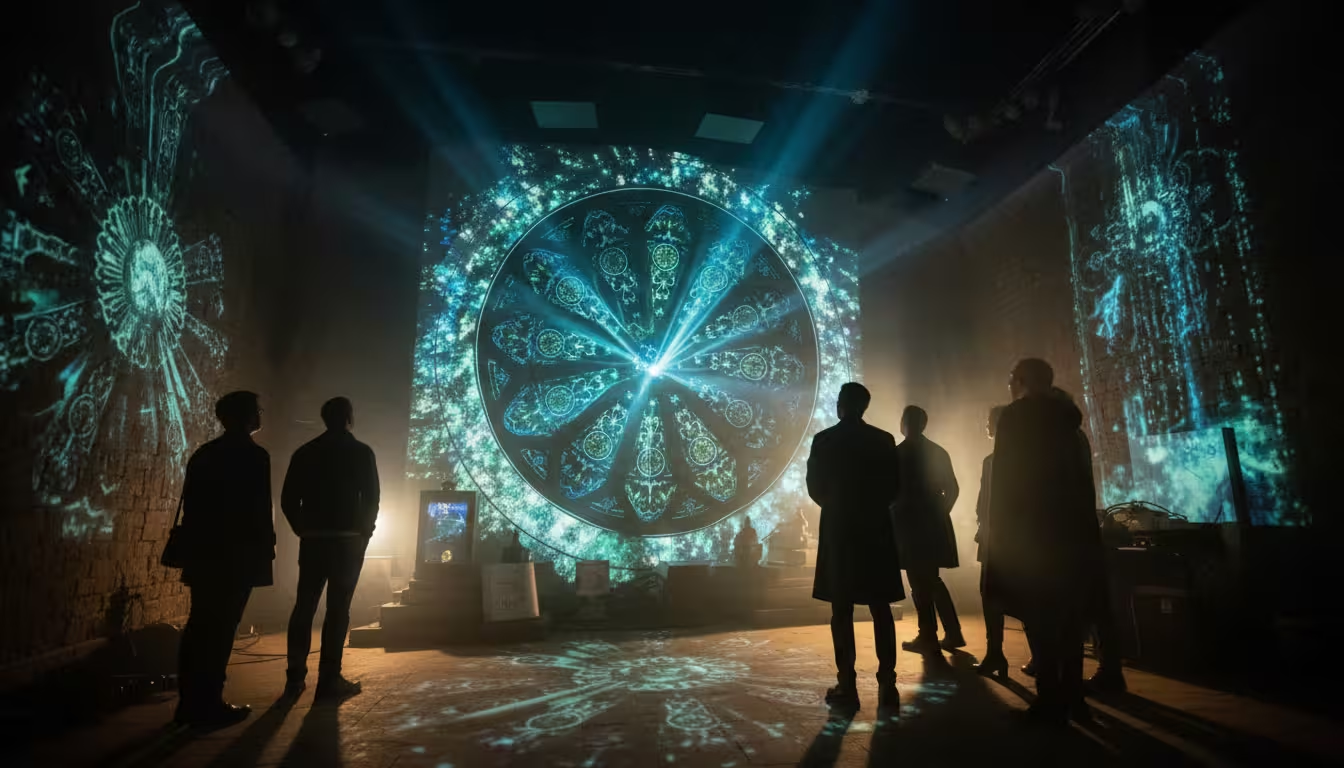
The grand opening of the Inverness Castle Experience in February 2026 marks a transformative chapter in the cultural and economic evolution of the Scottish Highlands.
This ambitious £47 million redevelopment has not only restored the city’s most recognisable historic landmark but also reinvented it as a dynamic cultural hub celebrating Highland identity and creativity.
Over the course of four years, architects, historians, and artists collaborated to breathe new life into the former courthouse and prison, crafting an interactive narrative that reflects the region’s landscapes, traditions, and communities.
The result is a world-class attraction designed as a “gateway” to the Highlands—anchored in the concept of An Turas (The Journey)—that invites visitors to explore the area through immersive storytelling, music, and digital experiences.
Watch ‘the opening ‘Discover the Spirit of the Highlands’ on The Inverness Castle Experience’s official Youtube Channel.
The project emerges within a sophisticated 2026 tourism ecosystem where travelers increasingly prioritise human value, authentic community engagement, and sustainable practice.
Supported by the Inverness and Highland City Region Deal, the transformation integrates high-technology digital installations with traditional Gaelic storytelling, ensuring that the castle remains a living entity that reflects the contemporary and historical voices of the Highland people.
The following analysis provides an exhaustive examination of the project’s architectural resilience, its immersive narrative structure, and its strategic role in the 2024–2030 Sustainable Tourism Strategy, positioning the Inverness Castle Experience as a catalyst for regional regeneration.
Architectural Resurrection: From Incarceration to Inspiration
The physical metamorphosis of Inverness Castle was directed by LDN Architects and Bancon Construction, who were tasked with the formidable challenge of preserving a Grade A-listed structure while integrating the infrastructure required for a high-capacity 21st-century attraction.
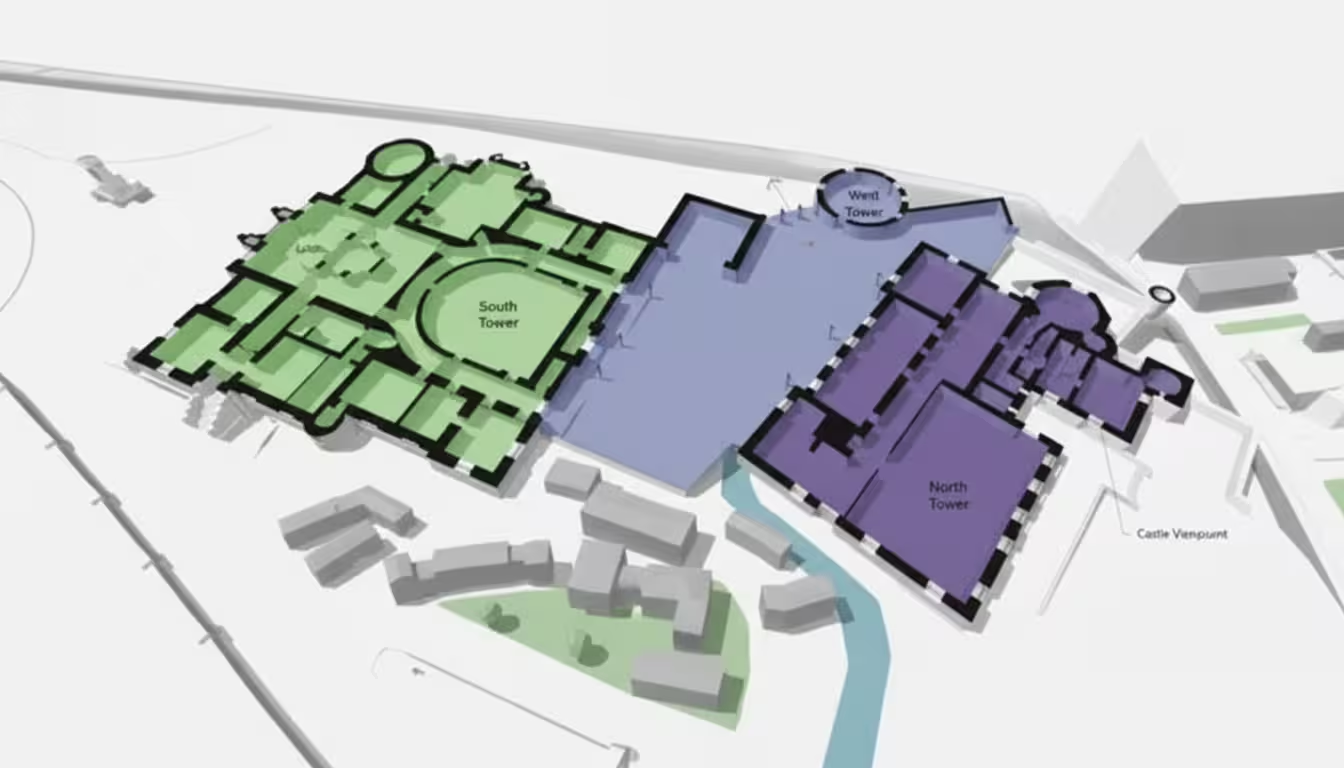
The site itself, perched on a red sandstone cliff overlooking the River Ness, has served as a strategic fortification since at least 1057, though the current buildings date primarily to the 1830s when they were constructed to house the sheriff court and the county prison.
Prior to this redevelopment, the interior was defined by the utilitarian and somber requirements of the Victorian justice system, featuring compartmentalised courtrooms, holding cells, and administrative offices.
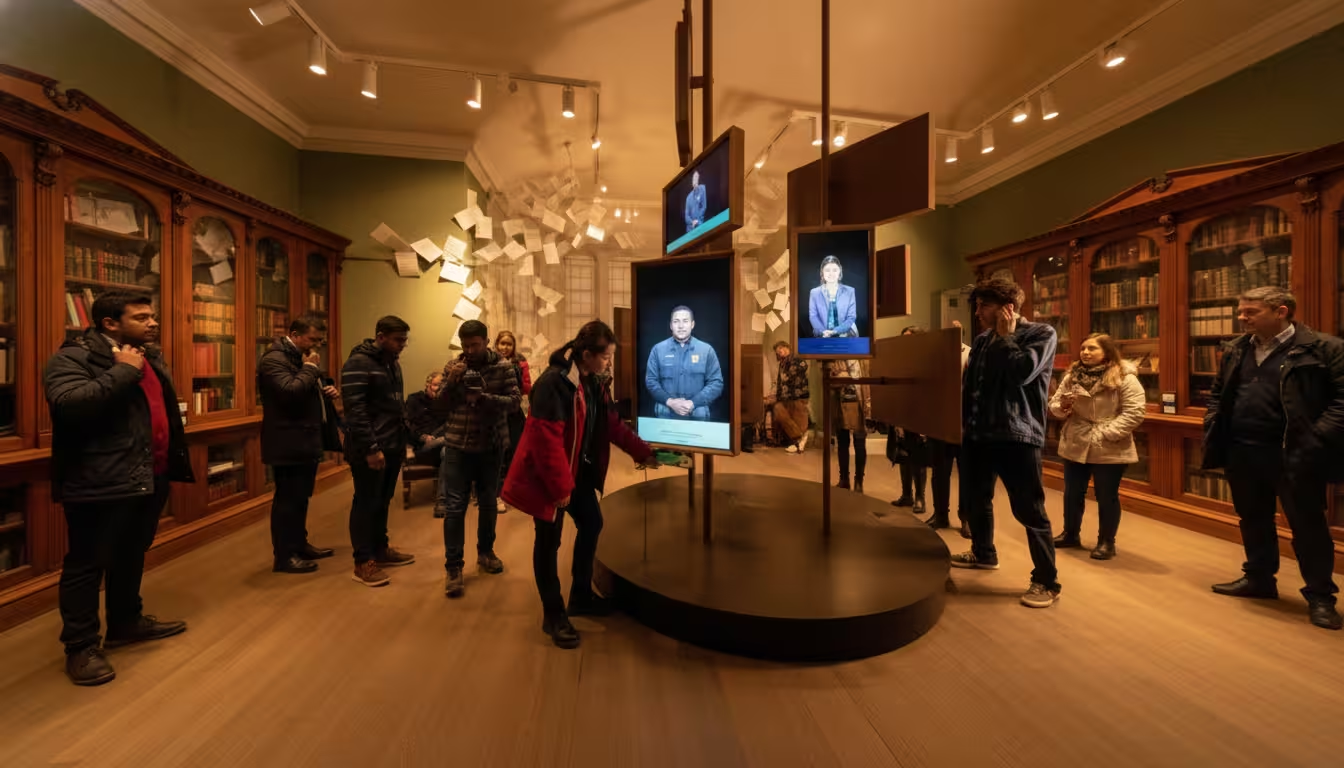
Architectural interventions focused on “opening” these spaces to allow for fluid visitor movement while respecting the historic fabric.
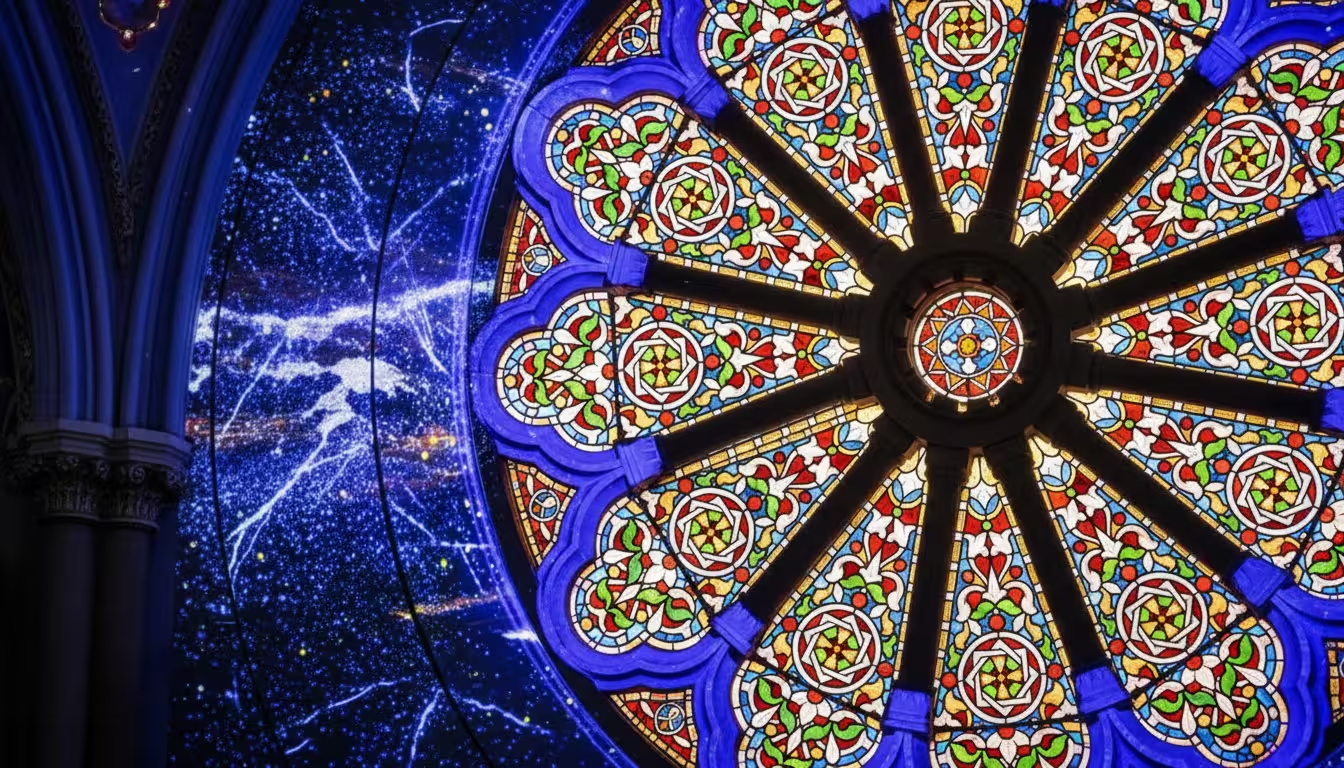
A central technical triumph of the project was the restoration and relocation of the 1867 Rose Window, a masterpiece of stained glass originally situated in a former church within the city.
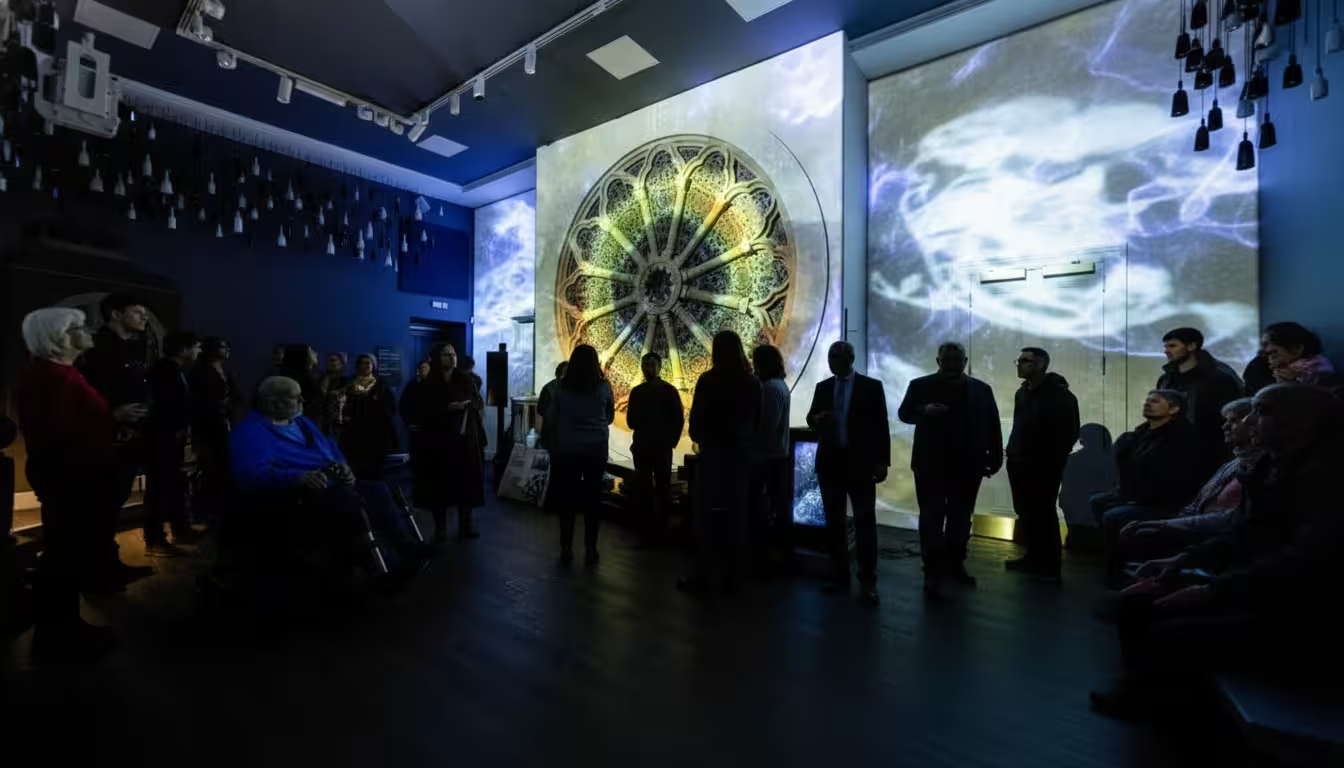
The window now serves as the focal point of the South Tower’s “Rose Room,” where it has been integrated into a sophisticated light and sound show that explores the symbolic heritage of the Highlands.
The engineering required to suspend and illuminate this delicate Victorian artefact within a circular stone aperture was a significant undertaking, involving specialist glass conservators from Iona Art Glass and local apprentices.
| Project Metric | Detail | Lead Entities |
| Total Investment | £47 Million | UK Govt, Scottish Govt, Highland Council, HIE |
| Architectural Lead | Heritage Conservation & Adaptation | LDN Architects |
| Main Contractor | Construction & Site Management | Bancon Construction |
| Project Duration | 2022 – 2026 (4 Years) | Multi-phase delivery |
| Visitor Capacity | 450,000 annually (estimated) | High Life Highland Management |
The renovation extended beyond the towers to include the castle esplanade and the surrounding gardens, which were redesigned to provide a seamless transition from the urban centre of Inverness to the elevated grounds.
These gardens are now inspired by Gaelic culture and the Highland landscape, offering a tranquil space for public reflection that remains free to access. This design philosophy ensures that the castle is no longer seen as a fortress of exclusion but as a porous community hub that invites exploration.
“An Turas”: A Masterclass in Immersive Storytelling
The core of the visitor experience, branded as “An Turas” (The Journey), represents a shift away from traditional, object-based museum displays toward a narrative-led model.
Visitors are guided through the South and North Towers by the recorded voices of the seanchaidh—the traditional Gaelic storytellers—who serve as the medium through which the history, legends, and contemporary realities of the Highlands are revealed.
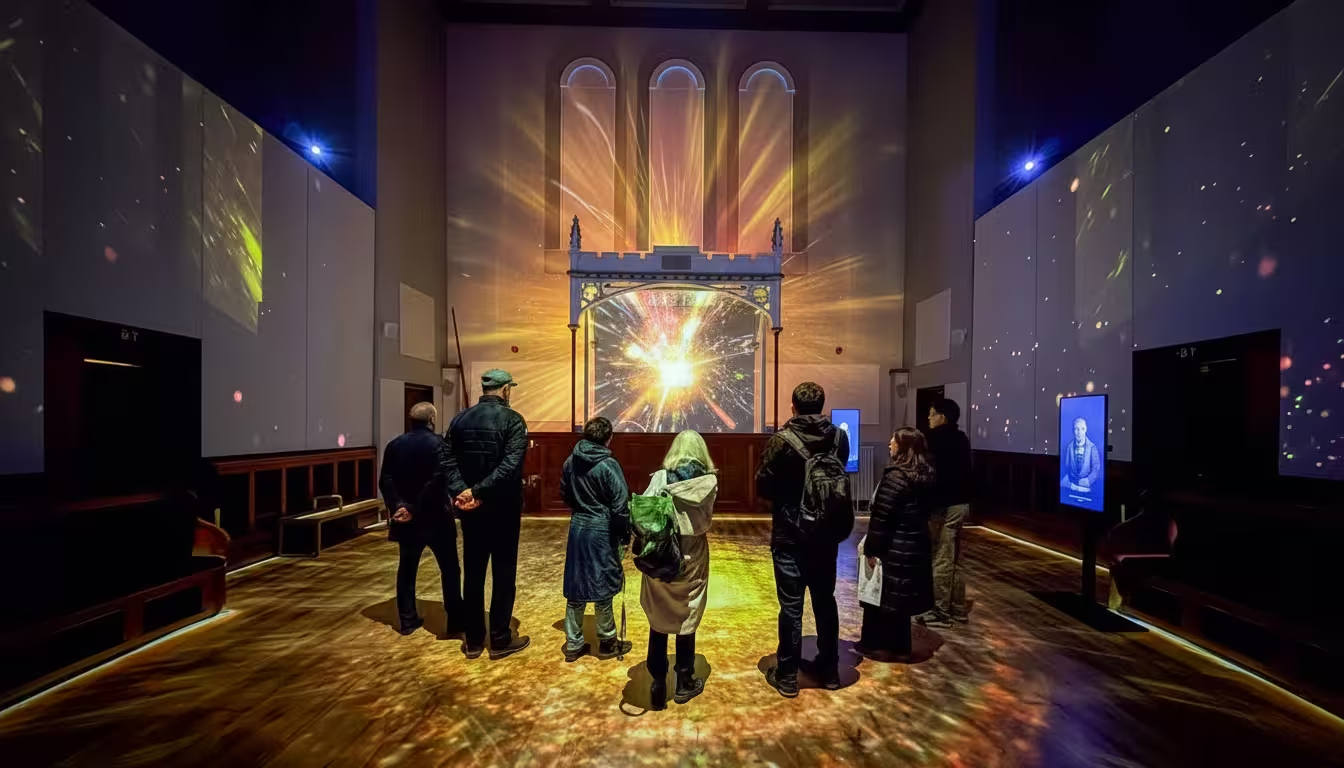
This method leverages the oral tradition of the region to create an emotional connection that resonates with modern travelers seeking authenticity in the 2026 search and AI landscape.
The South Tower: Landscapes and Legends
The journey begins in the South Tower, which was originally the courthouse. After passing through a spacious lobby and collecting handheld audio devices, visitors encounter the “story sheets”—a striking installation of cascading physical and digital papers that represent the layered memories of the Highland people.
These sheets act as a visual metaphor for the thousands of stories collected during the “Spirit of the Highlands and Islands” project, which sought contributions from residents across the region.
The Rose Room serves as the first major sensory intervention. Here, the restored Rose Window is brought to life through a mesmerising light show accompanied by powerful Highland music.
This experience is designed to be evocative and emotional, setting the “heartbeat” for the rest of the tour.
Following this, the “Highland Resources & Landscape” section explores the geological treasures of the region—from gold and oil to the potential of wind and sea—interwoven with tales of selkies, fairies, and the Brahan Seer.
This synthesis of the physical and the mythical is a hallmark of the 2026 travel trend toward “nourishing the senses”.
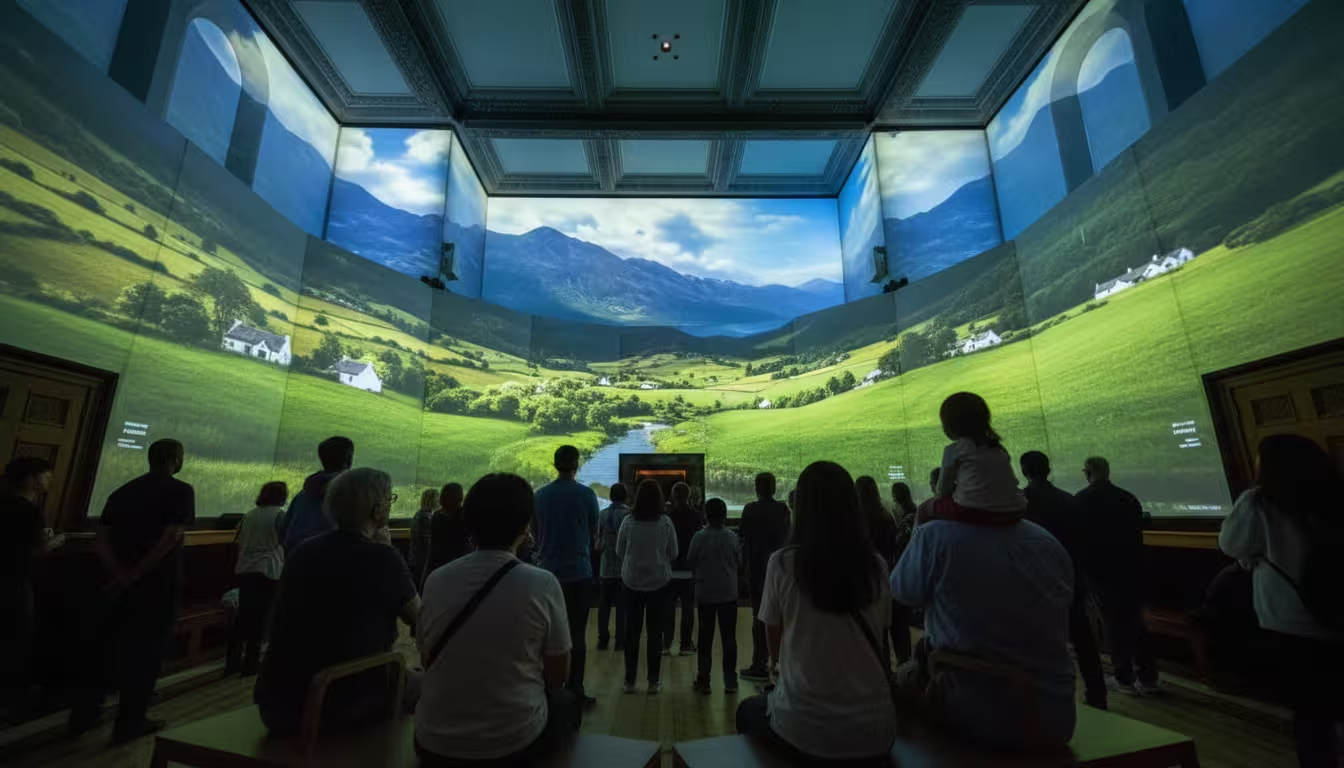
The South Tower culminates in the “Spirit Room,” an unforgettable audiovisual finale. This room wraps visitors in immersive imagery of soaring eagles, stormy skies, and Highland landscapes, using sensory triggers like warmth, firelight, and the sound of thunder to simulate the raw energy of the environment.
The intent is to leave visitors with a profound sense of connection to the land before they ascend to the roof terrace for panoramic views of the city, the River Ness, and the distant Great Glen.
The North Tower: Culture, Music, and Community
The North Tower, formerly the prison, focuses on the human and creative output of the Highlands. It houses the “Celebrating Highland People” exhibit, which features innovators, artists, and sporting legends, including the original Silver Camanachd Cup and the story of shinty, Scotland’s oldest sport.
This tower also hosts the “Highlander Library,” a curated interactive space filled with books, audio, and creative corners where visitors are encouraged to “write their own story” into the digital collection.
A significant highlight of the North Tower is the Runrig exhibition. As one of the most celebrated bands to emerge from the Highlands, Runrig’s music is used to illustrate the evolution of contemporary Celtic culture.
Watch Runrig play live on their official Youtube channel.
Visitors can listen to their music in an immersive environment that explores how the band helped shape the modern Gaelic identity. Additionally, the tower features a massive tapestry created by over 600 stitchers, providing a tactile representation of the region’s collaborative spirit and artisanal heritage.
Discover the New Castle Experience
The transformation of Inverness Castle from a courthouse to a premier visitor destination marks a new chapter for the city. Use the interactive portal below to explore the £47m redevelopment, learn about the “An Turas” journey through the towers, and find out how local residents can benefit from the Highlander Pass.
Economic Impact and Regional Tourism Strategy
The transformation of Inverness Castle is a cornerstone of the Highland Council’s Sustainable Tourism Strategy 2024–2030. With an expected annual visitor count of 450,000, the attraction is projected to generate £13.9 million in net annual expenditure for the Highland economy.
This economic impact is multi-dimensional, affecting employment, local supply chains, and the wider regional tourism infrastructure.
The following video from STV News presents the opening of The Inverness Castle Experience, presented by Nicola McAlley.
Job Creation and Skill Development
The Inverness Castle Experience directly supports more than 100 jobs in retail, hospitality, and visitor services. Crucially, the project has also provided work experience and apprenticeship opportunities for young people, ensuring that the £47 million investment contributes to the long-term professional development of the local workforce.
During the construction phase, local apprentices were instrumental in the restoration of the Rose Window and other historic features, embedding local pride into the very fabric of the building.
Local Supply Chain Integration
The attraction’s retail and culinary offerings are explicitly designed to support Highland producers.
The Castle Shop features products such as tartan, whisky, and crafts sourced from throughout the Highlands and Islands, while the Saltire Bistro serves locally produced food and drink.
This integration ensures that the economic benefits of the castle are felt by farmers, distillers, and artisans across the region, fulfilling the UK Government’s ambition for the site to act as a “driver for the regional economy”.
| Economic Indicator | 2026 Projection | Policy Source |
| Annual Visitor Count | 450,000 | |
| Direct Employment | 100+ Positions | |
| Annual Net Expenditure | £13.9 Million | |
| Scottish Govt Investment | £19.6 Million | |
| UK Govt Investment | £7.5 Million* |
*Note: UK Government funding forms part of the larger £315 million Inverness and Highland City Region Deal..
Sustainability and Seasonality: The Highlander Pass
A major challenge for Highland tourism has historically been the concentration of visitors in the summer months, leading to pressure on infrastructure and local services.
The Inverness Castle Experience addresses this through the innovative “Highlander Pass,” a scheme designed specifically for residents of the Highland Council area.
The Highlander Pass, available for the price of a single entry ticket (£20), offers local residents unlimited, bookable access to the paid experience from October to March. Additionally, pass holders receive a 10% discount in the Saltire Bistro and the Castle Shop throughout the year.
This strategy achieves two goals: it encourages “shoulder season” tourism by locals during the quieter winter months and ensures that the castle remains a “place for the people who call it home,” mitigating the risks of over-tourism and social alienation.
Alignment with the Sustainable Tourism Strategy 2024–2030
The 2024–2030 strategy, introduced by Cllr Ken Gowans, emphasises that tourism must be “regenerative, giving back more to our Highland communities and places than it takes”. The Inverness Castle Experience embodies this principle by:
- Acting as a “gateway” that inspires visitors to stay longer and explore further into the wider Highlands.
- Utilising a “polycentric approach” (the Future Operating Model) to ensure that service delivery is joined-up and person-centred.
- Integrating climate resilience and Net Zero goals into its operations, such as prioritizing green travel options and sustainable procurement.
Universal Accessibility and Facilities
Inclusivity was a primary mandate during the redevelopment, transforming a site once defined by barriers and exclusion into one that is welcoming to all.
The facility has achieved a high standard of universal design, ensuring that the 2026 visitor experience is equitable regardless of physical or sensory ability.
Physical Accessibility and Transport
The main entrance on View Place is the designated route for wheelchair users, featuring ramped access and electronic doors.
While the historic Flagpole Tower remains inaccessible due to its architectural constraints, both the North and South Towers are equipped with lifts that provide access to all exhibition floors.
The South Tower roof terrace is also partially accessible via a platform lift, allowing wheelchair users to enjoy the panoramic views of Inverness.
For visitors arriving by car, the site provides four disabled parking spaces for Blue Badge holders, which must be pre-booked. Staff members are available to escort vehicles from the gate through the gardens to ensure pedestrian safety, a level of service that reflects the project’s commitment to “excellence ahead of opening”.
Sensory and Communication Support
The digital aspect of the experience is fully supported for visitors with sensory impairments.
Handheld audio guides are available in nine languages—including Gaelic, Japanese, and Mandarin—and can be paired with hearing aids via provided headphones.
Crucially, the experience is also available in British Sign Language (BSL), both on personal devices and via larger BSL screens located in the main exhibition rooms.
| Facility | Provision | Accessibility Status |
| Tower Lifts | Access to all floors | Fully Accessible |
| BSL Screens | Integrated in exhibitions | Fully Accessible |
| Toilets | Every floor; Changing Places | Fully Accessible |
| Audio Guides | 9 Languages + BSL | Fully Accessible |
| Gardens | Ramped/Stepped access | Fully Accessible |
| Flagpole Tower | Viewing platform | Not Accessible |
Culinary and Retail Innovation: The Saltire Bistro and North Tower Bar
The gastronomic offering at Inverness Castle is an extension of the storytelling experience.
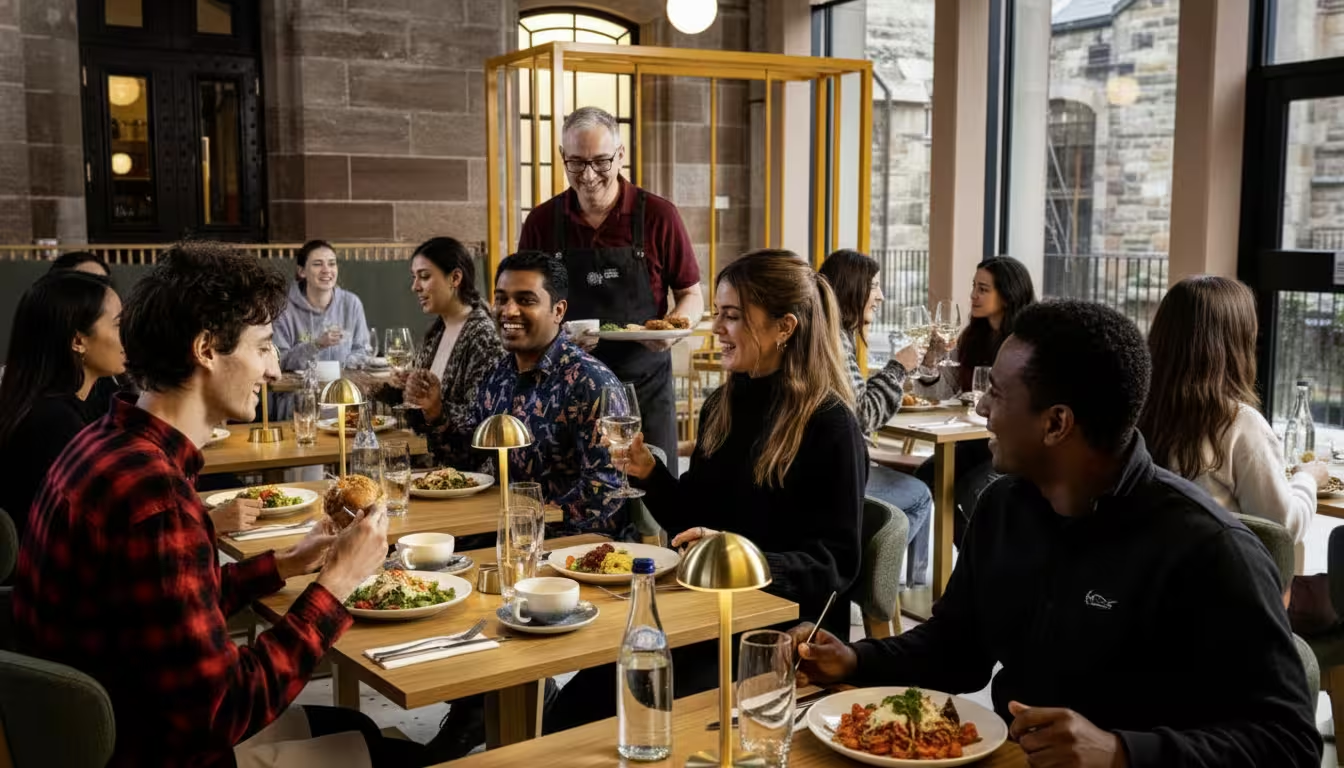
The Saltire Bistro, situated on the ground floor, is open daily and does not require a ticket for entry, serving as a social hub for both tourists and locals. It offers a full range of services from breakfast to hot food and “coffee and cake,” with a terrace that provides spectacular views of the river.
You can view their breakfast and lunch menu on the official website.
The Highland Heritage Afternoon Tea
The North Tower Bar hosts the most exclusive culinary experience: the Highland Heritage Afternoon Tea.
This experience costs £40 per person and must be reserved at least three days in advance. It is structured in chapters that mirror the narrative of the castle:
- Welcome: A handcrafted cocktail upon arrival.
- Chapter 1: A savoury course inspired by the land and sea.
- Chapter 2: An indulgent sweet course themed around local folklore.
- The Finale: Classic scones with clotted cream and Scottish preserves.
This “culinary journey” is designed to bring Highland culture and flavours to life, providing a tactile and gustatory connection to the stories heard during the tour.
The 2026 Travel Landscape: Cinematic Heritage and Trend Alignment
In 2026, Scotland is described as being “bigger, bolder, and more cinematic than ever”.
The Inverness Castle Experience is perfectly positioned to capitalise on several emerging travel trends, most notably “cinematic heritage” and “noctourism”.
The “Outlander” Effect and Narrative Tourism
With the final season of Outlander driving a surge in interest in Scottish history and heritage, the castle serves as a vital anchor point for fans seeking to “walk in the footsteps” of Highland legends.
By using the seanchaidh to guide visitors, the experience bridges the gap between the “imagined” Scotland of television and the “real” history of the people who shaped the Highlands.
This focus on “soul-stirring experiences” aligns with the 2026 desire for travel that “nourishes the senses and ignites inspiration”.
Noctourism and Extended Engagement
The extended opening hours during the summer months—until 8:00 pm—allow the castle to participate in the growing trend of “noctourism,” where visitors seek out evening cultural experiences.
The atmospheric lighting within the Rose Room and the Spirit Room is particularly effective during the darker hours, making the castle a year-round attraction that remains vibrant even during the Highland winter.
This strategy not only enhances the visitor experience but also supports the local evening economy, encouraging overnight stays in Inverness.
Operational Excellence and Group Travel
The day-to-day management of the Inverness Castle Experience is handled by High Life Highland on behalf of the Highland Council.
To ensure the attraction operates smoothly, a 10-minute timed entry system has been implemented for all ticketed experiences.
Trade and Group Bookings
Recognising the importance of the group travel market, the castle offers specific benefits for tours of 20 or more visitors. These include dedicated “early bird” time slots from 8:00 am (starting April 2026), a meet-and-greet host, and refreshment vouchers for coach drivers and guides to use in the bistro.
This professional approach ensures that large groups are managed without impacting the experience of individual visitors, maintaining the “serene and luxurious” atmosphere promised by luxury accommodation partners like the Ness Walk Hotel.
| Visitor Category | Entry Options | Key Benefit |
| Individual (Online) | Timed 10-min slots | Best price/guaranteed entry |
| Highland Resident | Highlander Pass | Unlimited winter entry/Year-round discounts |
| Coach Groups (20+) | Pre-booked (8:00-9:20 am) | Meet-and-greet/Driver vouchers |
| School/Education | Interactive exhibits | Engagement with shinty/music |
Management of Public Expectation and Search Visibility
In the 2026 search landscape, the “Inverness Castle Experience” is optimised for both Answer Engine Optimisation (AEO) and traditional search engines.
The digital story collection and the interactive elements of the website ensure that the “Spirit of the Highlands” project remains visible to global audiences before they even arrive in Scotland.
By providing clear answers to “People Also Ask” (PAA) queries—such as “Is it a traditional castle?” (Answer: No, it was a court/prison reimagined as a cultural hub) and “How long does a visit take?” (Answer: Approx 60-90 minutes)—the management team ensures a high level of user satisfaction and accurate visitor expectations.
The “Spirit of the Highlands and Islands” project has created a massive digital archive of tales passed down through generations, as well as contemporary interviews.
This collection serves as a “gateway to Highland life from the comfort of your own home,” building a digital bridge that attracts visitors to the physical site while promoting the wider region.
Conclusion: A Living Legacy for the Highlands
The Inverness Castle Experience is far more than a refurbishment of a Victorian landmark; it is a strategic reinvention of what a cultural institution can be in the 21st century.
By moving away from the static, silent displays of the past and embracing the vibrant, vocal traditions of the seanchaidh, the project has created a “world-class” attraction that resonates with the human-centric values of 2026.
The project’s success is measured not just in its 450,000 annual visitors or its £13.9 million economic contribution, but in its ability to foster social cohesion through the Highlander Pass and to provide a platform for the next generation of Highland musicians, artists, and storytellers.
It stands as a testament to the power of “Partnership and Collaboration,” as outlined in the sustainable tourism frameworks, and ensures that Inverness remains the cultural and economic heart of the North for decades to come.