
Launching a new website is exciting, but breaking through the noise to reach your target audience can feel daunting. The good news? There are proven strategies you can implement right now that will boost your search ranking almost immediately, without waiting months for results.
This guide focuses on actionable steps that deliver quick wins while building a foundation for long-term SEO success.
Understanding What Search Engines Want in 2025
Before diving into tactics, it’s important to understand what search engines prioritise today. Google’s 2025 algorithm updates have made it clear: topical coverage, user experience, and genuine value matter more than ever. Sites with comprehensive, helpful content that demonstrates expertise consistently outrank those relying on outdated keyword-stuffing techniques.

The landscape has shifted dramatically. According to recent analysis of over one million search results, topical coverage has become the most important on-page ranking factor. This means covering a subject thoroughly with depth and context, rather than simply mentioning keywords.
Set Up Your Technical Foundation First
Getting your technical SEO right from day one prevents problems that could take months to fix later. These foundational elements tell search engines your site is trustworthy and easy to crawl.
Start by implementing HTTPS security. This isn’t optional anymore. Search engines flag non-secure sites, and users rightly distrust them. Most hosting providers offer free SSL certificates through Let’s Encrypt, making this a straightforward first step.

Next, create and submit an XML sitemap to Google Search Console and Bing Webmaster Tools. This roadmap helps search engines discover all your pages efficiently. Many website platforms generate these automatically, but always verify yours is working correctly.
Ensure your site loads quickly, particularly on mobile devices. Core Web Vitals have become increasingly important ranking factors. Use tools like Google’s PageSpeed Insights to identify issues. Compress images before uploading, enable browser caching, and consider using a content delivery network if you serve a global audience.
Claim Your Google Business Profile Immediately
For any business with a physical location or serving a local area, claiming and optimising your Google Business Profile delivers one of the fastest SEO wins available. This free tool can dramatically improve your visibility in local search results and Google Maps within days.
Complete every section thoroughly. Add high-quality photos, accurate business hours, service descriptions, and your full address and contact details. The more complete your profile, the more trustworthy you appear to both Google and potential customers.

Request reviews from your first customers straight away. Positive reviews not only improve your local rankings but also increase click-through rates significantly. Respond promptly to all reviews, both positive and negative, demonstrating you value customer feedback.
Build Your Presence in Free Listing Directories
One of the most overlooked quick wins for new websites is claiming listings in free business directories. These provide valuable backlinks that boost your domain authority while improving your visibility across the web.
The free listing database currently offers the largest collection of free listings with coverage across all major economy countries. You can search by domain authority and other criteria to find the most valuable directories for your niche.

Consistency matters enormously. Ensure your business name, address, and phone number (NAP) are identical across every listing. Inconsistent information confuses search engines and can harm your local SEO performance.
Focus first on high-authority directories relevant to your industry.
General directories like Yelp, Yellow Pages, and industry-specific platforms provide the most value. Even if these submissions take a few hours, the backlinks and citations will benefit your rankings for years.
Create Comprehensive Content That Answers Questions
Content remains king in 2025, but the definition of quality content has evolved. Search engines now reward pages that demonstrate topical authority by covering subjects thoroughly rather than superficially.
Start by identifying the questions your target audience asks. Use tools like Answer the Public or Google’s “People Also Ask” feature to discover common queries in your niche. Build content that genuinely answers these questions with depth and detail.
Avoid thin content at all costs. Pages with comprehensive information between 1500 and 2500 words consistently outperform shorter articles. However, length alone isn’t the goal. Your content should be substantive, well-structured, and genuinely helpful.
Use keyword variations naturally throughout your content rather than repeating the same phrase. Modern search algorithms understand context and synonyms. This approach feels more natural to readers while signalling relevance to search engines.
Implement Schema Markup for Rich Results
Schema markup helps search engines understand your content’s meaning and context. This structured data can earn you enhanced search listings with star ratings, pricing information, event details, or FAQ sections that stand out from competitors.
Many website platforms and plugins make adding schema markup straightforward, requiring no coding knowledge. Focus first on implementing Organisation schema, Article schema, and FAQ schema for your key pages.

These rich results don’t just look more appealing in search results. They significantly increase click-through rates, which sends positive signals back to search engines about your content’s relevance and quality.
Build Internal Links Strategically
Internal linking is entirely within your control and delivers surprising SEO benefits. By connecting related pages on your site, you help search engines understand your content structure while distributing authority throughout your site.
As you create new content, look for opportunities to link to existing relevant pages. Use descriptive anchor text that tells readers what they’ll find when they click, rather than generic phrases like “click here.”

Create a hub-and-spoke content structure. Develop comprehensive pillar pages on your main topics, then create related subtopic pages that link back to the pillar. This topical clustering demonstrates expertise and helps pages rank for broader search terms.
Optimise Every Page for User Experience
Search engines increasingly prioritise sites that provide excellent user experiences. This means fast loading times, mobile-friendly design, clear navigation, and content that’s easy to scan and digest.
Break up long paragraphs. Keep them to three sentences maximum. Use subheadings frequently to create natural stopping points that make content scannable. Most readers skim rather than read every word, so make it easy for them to find relevant information quickly.

Add visual elements like images, diagrams, or tables to support your content. These not only make pages more engaging but also provide opportunities to use descriptive alt text that reinforces your topic relevance.
Ensure your site works flawlessly on mobile devices. With mobile searches now dominating, a poor mobile experience will sink your rankings regardless of how good your content is.
Write Compelling Titles and Descriptions
Your page titles and meta descriptions are often a visitor’s first impression of your site. Optimising these elements can dramatically improve click-through rates, which signals to search engines that users find your content relevant.
Include your primary keyword naturally in your title, preferably near the beginning. Keep titles under 60 characters to prevent them being cut off in search results. Make them specific and compelling rather than generic.

Meta descriptions don’t directly impact rankings, but they influence whether people click your result. Write descriptions between 150 and 160 characters that clearly explain what value the page offers. Include your keyword naturally but focus on encouraging the click.
Leverage Social Signals Strategically
While social media metrics aren’t direct ranking factors, they influence SEO indirectly through increased visibility and traffic. When your content gets shared, it reaches new audiences who may link to it, creating valuable backlinks.
Add social sharing buttons to your content to make sharing effortless. When you publish new content, share it across your social channels and encourage engagement through questions or discussion prompts.

Building a social media following takes time, but even modest engagement can drive traffic to your new site while you wait for organic search rankings to develop.
Monitor and Refine Based on Data
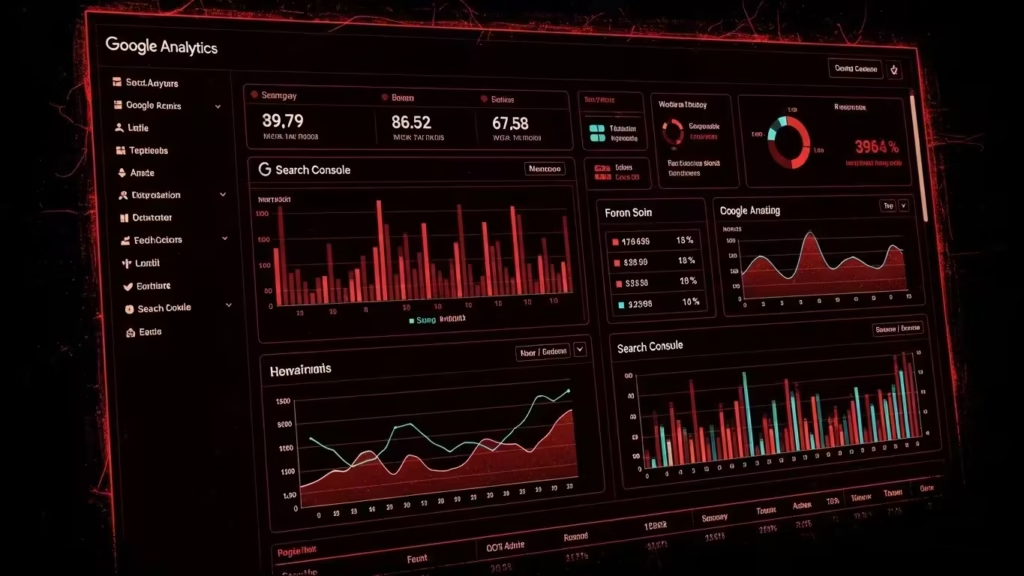
Set up Google Search Console and Google Analytics from day one. These free tools provide invaluable insights into how people find and use your site.
Check Search Console weekly to identify any crawling errors, security issues, or indexing problems. The Performance report shows which queries bring visitors to your site, revealing opportunities to optimise existing content or create new pages targeting related terms.
Track your rankings for target keywords to measure progress. When you see improvements, analyse what worked so you can replicate those strategies. When pages underperform, investigate why and make adjustments.
Quick Wins for Immediate Impact
| Strategy | Time to Implement | Potential Impact |
|---|---|---|
| Claim Google Business Profile | 1-2 hours | High for local businesses |
| Submit to free directories | 2-4 hours | Medium to high |
| Fix site speed issues | 2-6 hours | High |
| Add schema markup | 1-3 hours | Medium |
| Optimise titles and descriptions | 2-4 hours | Medium to high |
| Create comprehensive pillar content | 1-2 weeks | Very high |
Building Long-term SEO Success
While these quick wins deliver faster results than traditional SEO strategies, sustainable success requires ongoing effort. Commit to regularly publishing high-quality content that serves your audience’s needs.
Focus on building genuine relationships within your industry. Guest posting on established sites, participating in relevant online communities, and creating content worth linking to naturally attracts backlinks over time.

Stay informed about algorithm updates and industry best practices. Search engine optimisation evolves constantly, and strategies that work today may become less effective tomorrow.
Frequently Asked Questions
How quickly can I expect to see results from these SEO strategies?
Some tactics like claiming your Google Business Profile or submitting to directories can show results within days. Content-based strategies typically take two to four weeks to impact rankings, though comprehensive topical content often gains traction faster than thin pages.
Do I need technical knowledge to implement these strategies?
Most of these strategies require minimal technical expertise. Website platforms like WordPress, Shopify, and Wix offer user-friendly tools and plugins that simplify tasks like adding schema markup or optimising images. For more complex technical issues, consider consulting an SEO professional.
Should I focus on keywords or topics?
Modern SEO favours topical authority over individual keywords. Rather than targeting single phrases, create comprehensive content covering entire subjects. This approach naturally incorporates keyword variations while providing genuine value to readers.
How important are backlinks for a new website?
Backlinks remain crucial for building domain authority and trust with search engines. For new sites, focus on quality over quantity. A few links from relevant, authoritative sources provide more value than dozens from low-quality directories.
Can I rank without spending money on SEO tools?
Absolutely. Google Search Console, Google Analytics, and Google Business Profile are free and provide most of what new sites need. Free listing directories and manual outreach for backlinks cost only time. Paid tools become more valuable as your site grows and you need more sophisticated analysis.