The digital landscape has officially moved beyond the era of static playback into a time of world re-synthesis. This article explores how the convergence of generative AI and spatial computing is defining a new, rich media experience in 2026. You will learn how these breakthroughs are turning passive viewers into active participants in a living, digital reality.
The Dawn of World Re-synthesis
In 2026, the traditional boundaries of video composition have been replaced by Generative Augmented Reality (GAR).
This shift marks the end of simple, rule-based spatial overlays that felt detached from the physical world. Instead, unified generative backbones now allow digital content to feel physically integrated into our surroundings.
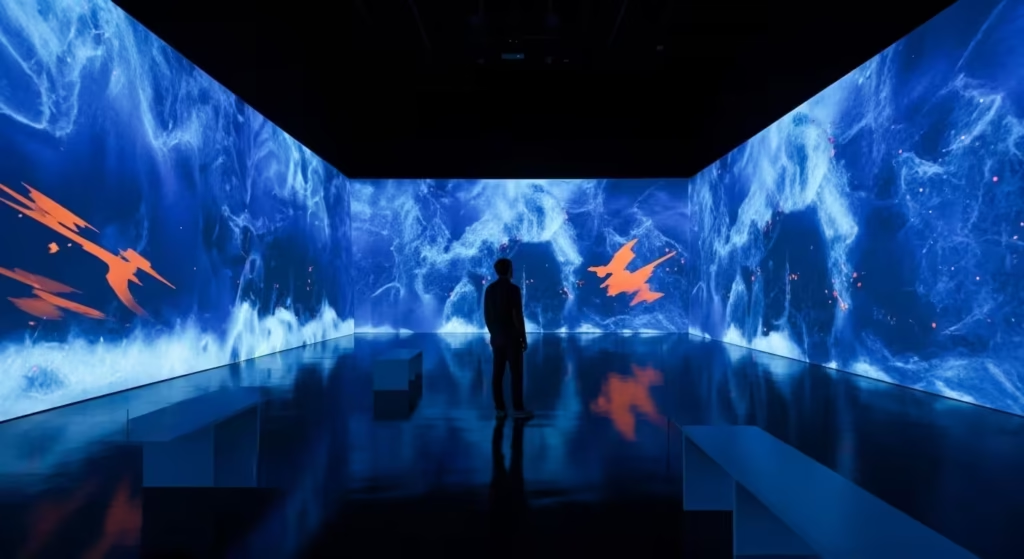
This evolution is driven by what experts call medium liquidity, where the internet allows any combination of sight and sound to be mashed up instantly. Organisations are now required to scale these interactive experiences to remain competitive in a landscape that values immersion over observation.
This year represents the “next normal,” where digital media is no longer a window we look through, but a space we inhabit.
The Hyper-Personalisation Revolution in Marketing
Hyper-personalisation in 2026 is no longer a luxury but an economic necessity for modern brands. Research from MIT has demonstrated that generative AI can reduce video production costs by a staggering 90 per cent.
This efficiency allows for the creation of thousands of unique ad variants that increase click-through rates by up to 9 percentage points.
Digital doubles and persona-based content have become the primary tools for global reach. Brands can now deploy virtual avatars that speak any language and adapt to specific demographics without the need for a single physical re-shoot.
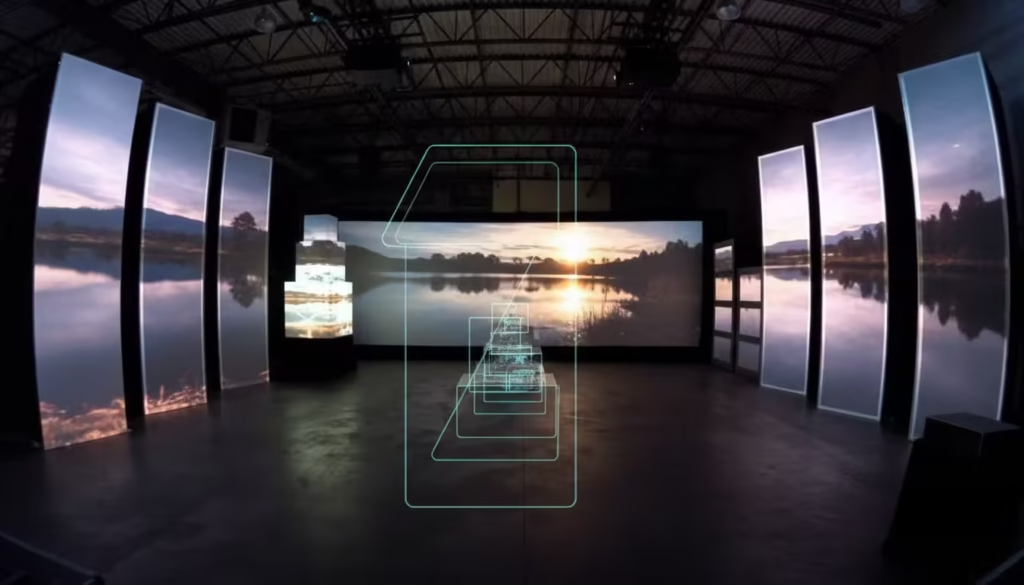
This level of scale ensures that every customer feels as though the brand is speaking directly to them.
Strategic implementation relies on a model of guided personalisation. In this setup, human creatives remain the architects of the narrative while AI serves as the engine of production.
This balance ensures that while the output is highly automated, the core brand identity and emotional resonance remain authentic.
Project Genie: Interactive Worlds for All
Google DeepMind has officially launched Project Genie for Google AI Ultra subscribers in the USA, marking a milestone in accessible world-building. Powered by the Genie 3 model, this web-based prototype allows users to generate fully interactive 3D environments from simple text or image prompts.
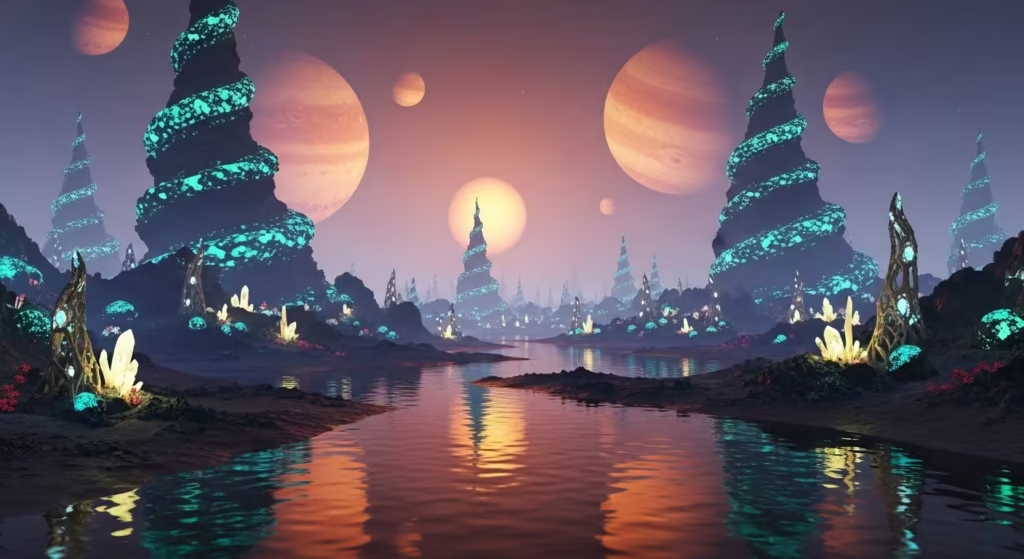
Unlike traditional video, these worlds are playable at 24 frames per second in 720p resolution.
| Feature | Project Genie (Genie 3) | Traditional Game Engines |
| Creation Method | Natural language prompts | Manual asset coding |
| Render Speed | Real-time generation | Pre-baked/procedural |
| Physics | Self-taught AI logic | Hard-coded engines |
| Accessibility | Web-browser based | High-end hardware |
This technology addresses the fundamental challenge of building artificial general intelligence by teaching AI to understand physical consistency. Users can now “sketch” a world using a single photo, then step into it as a character capable of walking, flying, or driving.
This launch has effectively moved world-building from the domain of developers to the fingertips of the general public.
Applications of Genie 3 and World Models
The rollout of Genie 3 in the USA has opened up transformative applications across several industries. In education, teachers are using the platform to create “Primary Sources, Reimagined.”
Students can now prompt a walk through the Library of Alexandria or explore the surface of Mars, experiencing history and science through exploration rather than textbooks.
For the gaming industry, Genie 3 serves as a rapid prototyping powerhouse. Designers can instantly generate and test level concepts, reducing the development cycle for environmental art from months to minutes.
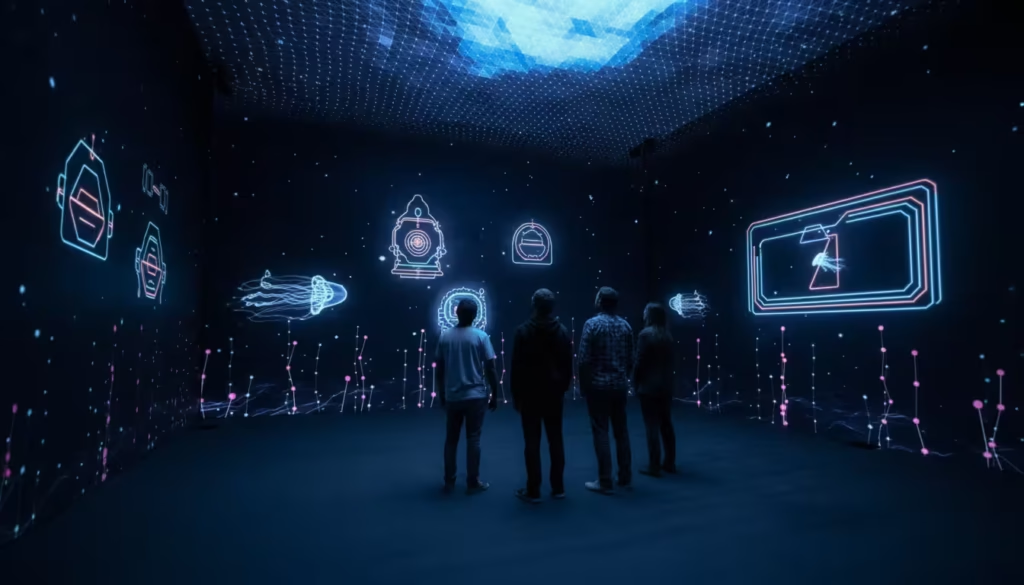
While it is currently limited to 60-second interactive sessions, the ability to “remix” and expand these worlds is paving the way for infinite, player-responsive narratives.
Robotics and autonomous vehicle developers are also leveraging these promptable worlds for safe training environments. By simulating complex weather or hazardous terrain, engineers can train AI agents in diverse scenarios that would be too risky in the real world.
This “embodied learning” is a crucial stepping stone toward creating robots that can safely navigate our messy, unpredictable reality.
Spatial Computing and High-Fidelity Presence
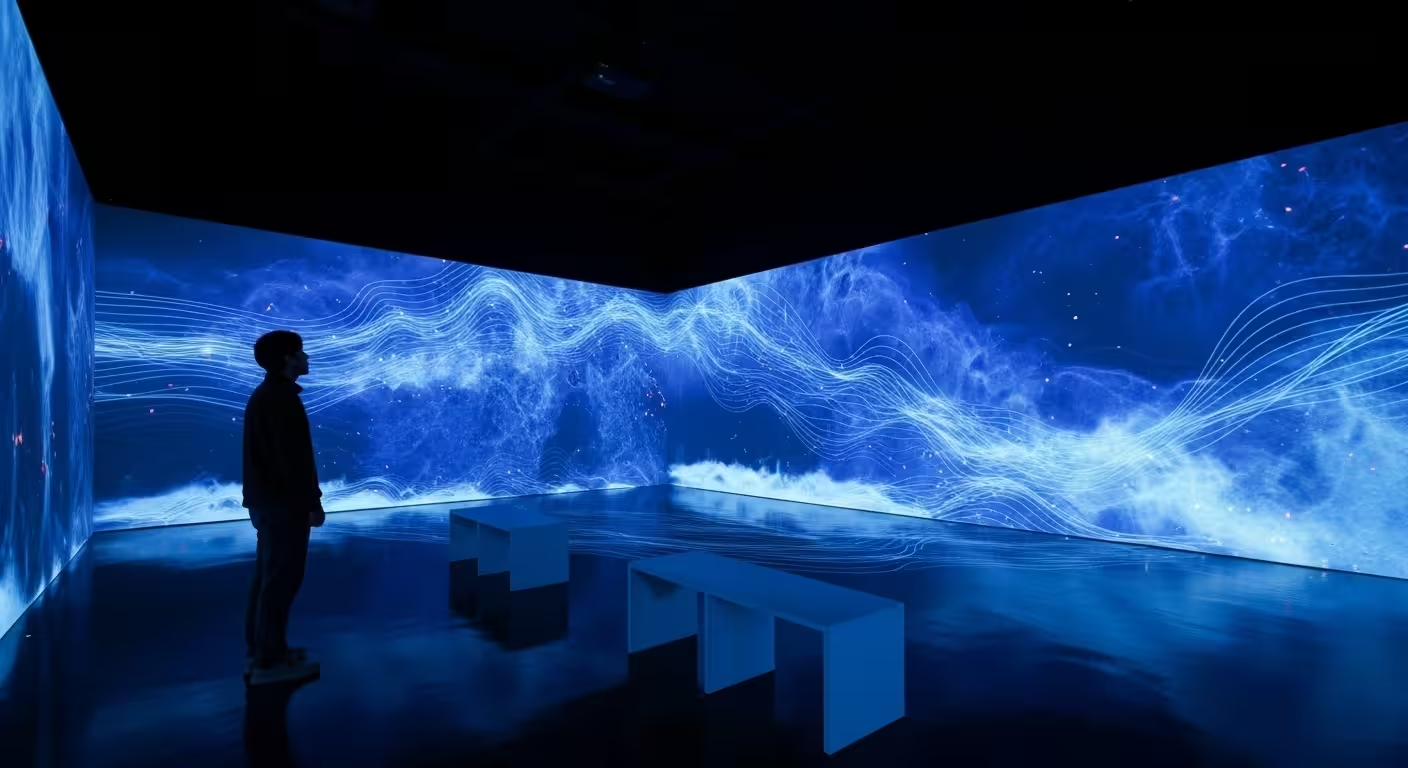
Spatial computing has transitioned from niche headsets into the fabric of daily life, where virtualised walkable spaces are redefining our perception of presence through the sophisticated application of VR-NeRF technology.
These environments, boasting dual 2Kx2K resolutions, offer users total freedom of movement within digital realms that are no longer purely visual; instead, integrated haptics provide a multisensory depth that makes virtual interactions feel truly tangible.
The barrier to entry for creators has significantly lowered thanks to Generative Augmented Reality (GAR), where implicit feature-based generation bypasses the need for traditional, complex 3D meshes to create high-fidelity, persistent scenes.
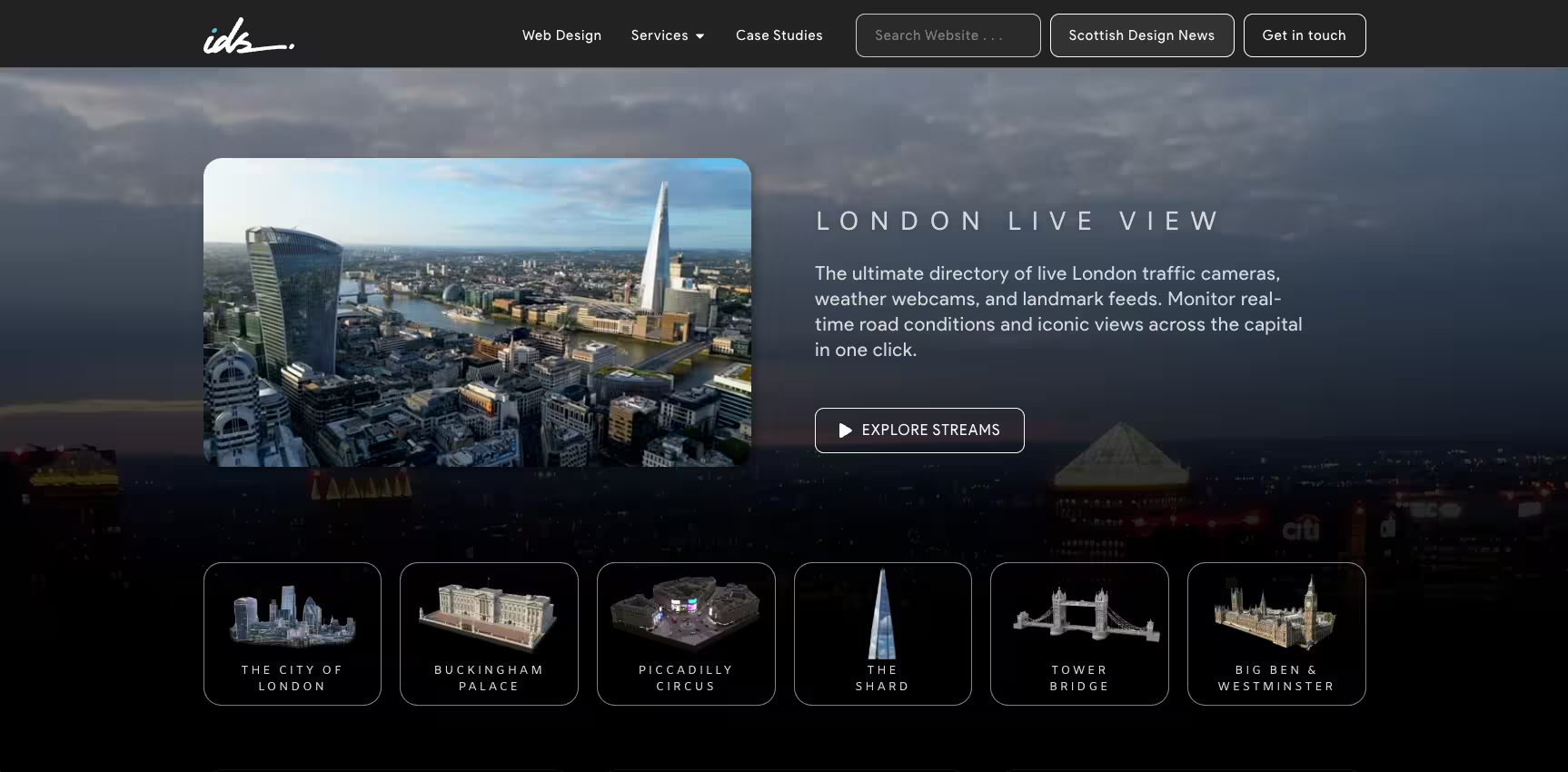
This evolution has birthed hybrid milieus where digital information is elegantly diffused across public squares, a trend spearheaded by the Inverness Design Studio through the ambitious UK Live View project.
By synchronising the physical and digital via a nationwide network of live streams, the studio has bridged the gap between the home and the outdoors, offering real-time windows into iconic locations through dedicated platforms such as Scottish Live View, England Live View, and the hyper-local London Live View.
This achievement provides a seamless, spatial window into the world, ensuring that the vibrancy of UK landmarks, sports events, and urban landscapes is available to everyone without cost or physical constraint.
Infrastructure and the Media Mobility Shift
The backbone of this new reality is a massive shift in connectivity and mobility. Scotland’s Intelligent Transport Systems strategy highlights how connected vehicles are becoming personalised media platforms. By 2026, the car is no longer just a mode of transport, but a hub for immersive, rich media content.
To support these high-performance experiences on low-resource devices, remote rendering has become the industry standard.
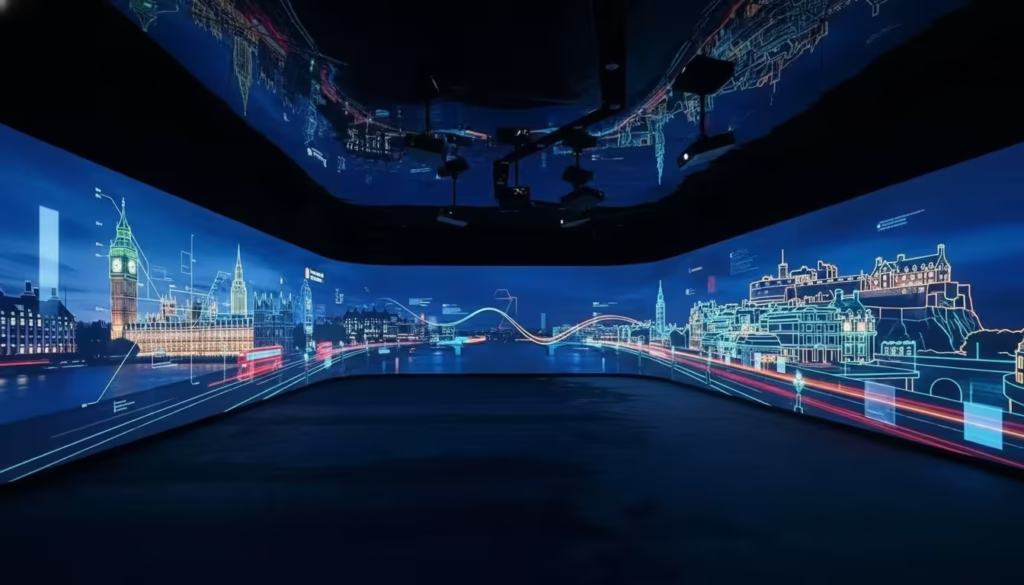
Advanced protocols like WebRTC and QUIC-based streaming allow for cloud processing that eliminates lag, even in complex XR environments. This ensures that the transition to immersive media is inclusive, regardless of a user’s local hardware power.
Five Key Takeaways for 2026 Media
- Project Genie now allows US users to create playable 3D worlds from text.
- Generative AI reduces video production costs by 90 per cent for brands.
- Education is being transformed by immersive, promptable historical simulations.
- Connected vehicles have evolved into personalised, high-fidelity media hubs.
- Human authenticity remains the most valuable asset in an AI-driven landscape.
Ethics and the Future of Digital Trust
The rise of digital clones and promptable realities has brought the issue of trust to the forefront of society. Public fears regarding deepfakes and the erosion of digital information require a new commitment to transparency.
Consent and autonomy protocols are now essential to protect individual likenesses in an age of easy replication.
Despite the technical prowess of AI, human-centred content still outperforms pure automation. Audiences in 2026 crave real emotions and authentic stories that only a human perspective can provide.
The future of video is a dialogic one, representing a constant negotiation between the user, the algorithm, and the environment.
Frequently Asked Questions
Is Project Genie available outside the USA?
Currently, Project Genie is rolling out to Google AI Ultra subscribers in the United States, with plans to expand to more regions later this year.
Can Genie 3 create a full video game?
Genie 3 is a world model rather than a game engine, meaning it focuses on generating environments and physics rather than complex game mechanics or scores.
What resolution does Genie 3 support?
The current prototype generates interactive environments at 720p resolution and a smooth 24 frames per second.
How does VR-NeRF differ from traditional 3D?
VR-NeRF uses neural networks to represent 3D scenes from photos, allowing for photorealistic walkable spaces without manual 3D modelling.
Would you like me to create a detailed guide on how to use Project Genie for educational storytelling or marketing prototypes?