Finding the right UK web design partner can feel like searching for a needle in a haystack. With over 2,100 agencies operating across the country and the industry continuing to grow, British businesses have never had more choice when it comes to building their digital presence.
The challenge is knowing where to start and what actually matters when your website is often the first impression potential customers have of your brand.
This guide walks you through everything you need to know about UK web design, from current trends shaping the industry to practical advice on selecting the right web design agency UK for your needs. Understanding the landscape will help you make smarter decisions.
Why UK Web Design Matters More Than Ever
The statistics paint a compelling picture. According to recent research, 94% of first impressions are design-related, and visitors take just 0.05 seconds to form an opinion about your site. That is barely enough time to blink, yet it shapes whether someone stays to explore or clicks away to a competitor.
Poor design carries a real cost too. Studies show that 88% of web users are less likely to return to a website after a poor user experience, and businesses leave an estimated 35% of potential revenue on the table due to bad UX. For businesses operating in competitive markets, these numbers represent lost revenue that adds up quickly.
British web design has developed its own character over the years. There is a tendency towards clean, purposeful aesthetics that prioritise user experience over flashy gimmicks. This approach aligns well with what modern consumers expect, particularly as mobile devices continue to dominate internet traffic.
Current Trends Shaping British Web Design in 2026
The UK web design industry is evolving rapidly, driven by changing user expectations and advancing technology. Understanding these shifts helps businesses make informed decisions about their digital investments.
AI as a Creative Partner
Artificial intelligence has moved firmly from buzzword to practical tool. According to Elementor’s 2026 trends report, AI is transforming from a content generator into a trusted creative co-designer. Websites can now adapt dynamically to individual users, showing tailored content, layouts and recommendations based on browsing behaviour.
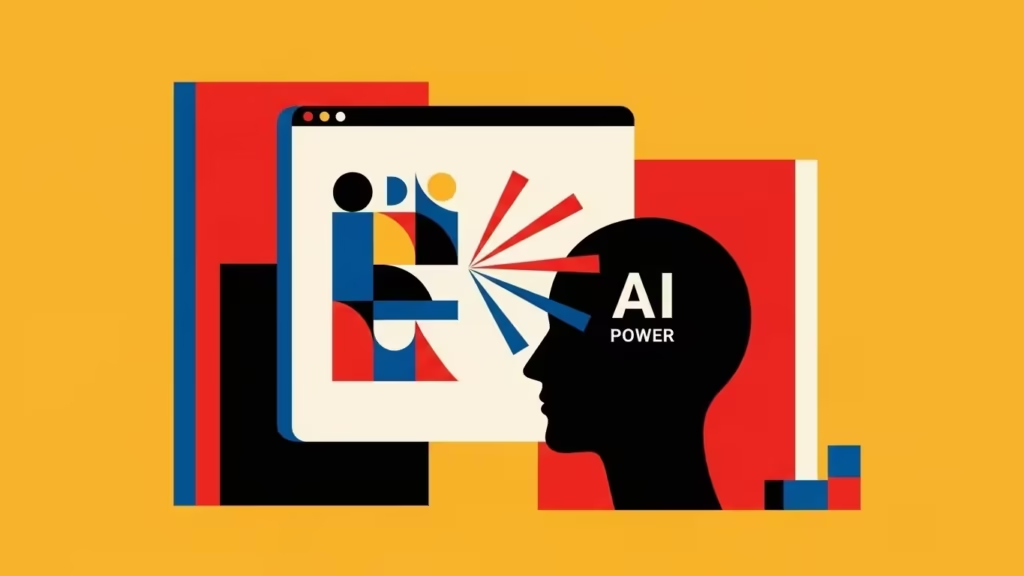
For UK businesses, this means websites that feel more responsive and helpful. AI-powered chatbots provide conversational support that predicts what users need before they ask, whilst generative design tools help agencies produce creative concepts faster than ever.
Organic Shapes and Anti-Grid Layouts
After years of strict grids and sharp minimalism, design is softening. Organic shapes, flowing lines and soft gradients are making digital experiences feel more natural and approachable. This trend reflects a broader desire for humanity in technology, creating differentiation in a world increasingly saturated with algorithmic precision.
Web designers are embracing anti-grid layouts that challenge rigid uniformity, introducing rhythm, movement and playfulness to brand experiences.
Sustainable Web Design
Environmental considerations are influencing design choices in ways that might surprise you. Sustainable web design focuses on energy-efficient methods, reducing unnecessary data use and choosing eco-friendly hosting options.
Compressed images, streamlined code and green hosting contribute to lower carbon footprints whilst simultaneously improving site performance.
This trend resonates particularly well with UK consumers, who increasingly factor environmental responsibility into purchasing decisions.
Real-Time Personalisation
Personalisation has existed for years, but 2026 marks the shift from static data segmentation to real-time adaptation. Websites will increasingly feature contextual experiences with adaptive navigation, recommendations and CTAs informed by signals like on-page behaviour, patterns and personal preferences.
With AI search reshaping how people discover brands, giving users exactly what they need the moment they land becomes even more important for conversion.
Motion Design with Purpose
Animation and motion effects are becoming more sophisticated but also more restrained. According to Mud’s 2026 trends analysis, micro-interactions are evolving into a navigational language, using sequences of small animations to guide users through complex journeys.
The key word is purposeful. Every animated element should serve a function rather than simply existing to impress. Visual feedback reduces drop-off, step-by-step guidance helps complex journeys, and interaction builds understanding in ways static imagery cannot.
What to Look for in a UK Web Designer
Choosing the right professional web design UK partner requires looking beyond portfolios and price lists. The relationship you build with your UK web designer or agency shapes the outcome of your project in ways that are not always obvious at the start.
Technical Competence
A strong web design agency UK will demonstrate expertise across multiple platforms. WordPress remains the market leader, powering over 43% of websites globally, but Shopify, Webflow and custom solutions each have their place depending on your needs.
Ask potential partners about their development approach. Do they build responsive sites that work seamlessly across devices? How do they handle page speed optimisation? What content management system do they recommend for your specific requirements?
User Experience Focus
The best British web design professionals think beyond surface aesthetics. They consider how visitors will actually use the site, mapping out user journeys and identifying potential friction points before they become problems.
Look for agencies that mention user research, wireframing and usability testing as part of their process. These steps add time upfront but prevent costly revisions later.
SEO Understanding
A beautiful website that nobody can find serves little purpose. Your UK web design partner should understand how design decisions affect search engine visibility. This includes technical considerations like site structure, page speed and mobile responsiveness, alongside content strategy and metadata implementation.
The best agencies integrate SEO thinking from the project start rather than treating it as an afterthought.
Communication Style
Pay attention to how agencies communicate during the initial consultation. Are they asking questions about your business goals, or simply listing their services? Do they explain technical concepts clearly, or hide behind jargon?
The discovery phase reveals a lot about working relationships. Agencies that invest time understanding your needs before quoting tend to deliver better results than those rushing to close deals.
Comparing Web Design Services UK
The range of web design services UK businesses can access varies enormously. Understanding what different service levels include helps set realistic expectations.
| Service Level | Typical Investment | What You Get | Best For |
|---|---|---|---|
| Template-Based | £500 to £2,000 | Pre-designed themes with basic customisation, limited functionality | Startups, personal projects, minimal budgets |
| Custom Design | £3,000 to £15,000 | Bespoke layouts, tailored user experience, CMS integration | Growing businesses, established SMEs |
| Enterprise Solutions | £15,000 to £100,000+ | Complex functionality, integrations, ongoing support, scalable architecture | Large organisations, ecommerce platforms |
These figures represent general ranges rather than fixed prices. Factors like project complexity, timeline and ongoing support requirements all influence final costs.
The UK market tends towards the higher end of global averages, reflecting the quality of talent available and the cost of doing business locally. However, investing in professional web design UK services typically delivers better long-term value than cutting corners with cheaper alternatives.
The Web Design Process Explained
Understanding how professional UK web design projects unfold helps businesses prepare effectively and collaborate more productively with their chosen agency.
Discovery and Strategy
Every successful project begins with understanding. This phase involves researching your business, competitors, target audience and goals. A thorough discovery process might include stakeholder interviews, competitor analysis, user research and technical audits of existing platforms.
The output is typically a strategic brief that guides all subsequent decisions. Skipping or rushing this stage is one of the most common causes of project problems later.
Information Architecture and Wireframing
Before any visual design begins, the structure of your site needs planning. Information architecture determines how content is organised and how users navigate between sections. Wireframes translate this structure into rough layouts that show where elements will sit without getting distracted by colours and imagery.
This stage is about functionality rather than aesthetics. Getting the skeleton right makes everything else easier.
Visual Design
With structure established, designers create the visual language of your site. This includes colour palettes, typography, imagery styles and the overall aesthetic that will represent your brand online.
Most agencies present design concepts for key pages first, refining based on feedback before extending the approach across the full site. This iterative process ensures alignment before significant development work begins.
Development and Testing
Approved designs move into build. Developers translate visual concepts into functional code, integrating content management systems, payment gateways, forms and whatever other functionality your site requires.
Thorough testing catches issues before launch. This includes checking functionality across different browsers and devices, testing forms and checkout processes, verifying loading speeds and ensuring accessibility standards are met.
Launch and Beyond
Going live is a milestone rather than an endpoint. Post-launch support ensures any issues are quickly resolved, whilst ongoing maintenance keeps your site secure, fast and up to date.
The best UK web design relationships continue long after the initial project completes. Regular updates, performance monitoring and incremental improvements help your site evolve alongside your business.
Common Mistakes to Avoid
Experience reveals patterns in what goes wrong with web design projects. Learning from others saves time, money and frustration.
Prioritising aesthetics over usability leads to sites that look impressive but frustrate visitors. Research consistently shows that 60% of users consider usability the most critical website design feature, ahead of visual appeal.
Neglecting mobile users remains surprisingly common despite years of warnings. With mobile traffic dominating, sites that perform poorly on smaller screens lose the majority of potential visitors before they even engage with content.
Ignoring page speed seems innocuous but carries serious consequences. For every ten seconds it takes your site to load, your chance of bounce increases by 123%. For an ecommerce site generating significant revenue, slow loading represents substantial lost sales every month.
Skipping the discovery phase to save money almost always costs more in the long run. Projects built on assumptions rather than research frequently require expensive revisions when reality fails to match expectations.
UK Web Design Agencies Worth Knowing
The British market includes agencies of every size and specialisation. Whilst comprehensive comparisons require detailed briefings, several names consistently appear in industry discussions.
Identify Digital in West Yorkshire has built a reputation for combining clean UX with strong technical delivery, particularly for SMEs seeking WordPress solutions with reliable ongoing support.
CTI Digital in Manchester handles enterprise-scale projects, working with organisations in education, healthcare and public sectors on complex platforms requiring robust architecture.
Creative Brand Design in London specialises in immersive, interactive experiences for clients including major lifestyle and entertainment brands seeking distinctive digital presence.
Clarity DX focuses specifically on WordPress development for B2B technology and professional services companies, bringing deep platform expertise to their specialism.
The Inverness Design Studio specialises in full-stack web development and is now the fastest growing digital agency in Scotland.
Smaller boutique studios often deliver exceptional results for specific niches. The key is matching agency strengths to your particular requirements rather than simply choosing the biggest name.
Questions to Ask Before Hiring
Preparing thoughtful questions helps evaluate potential UK web design partners effectively.
What is your process for understanding client requirements before design begins? Strong agencies invest significantly in discovery and will explain their approach in detail.
Can you share examples of similar projects with measurable outcomes? Past work demonstrates capability, but results matter more than aesthetics alone.
How do you handle revisions and scope changes during a project? Clear processes prevent misunderstandings and budget overruns.
What ongoing support do you provide after launch? Websites require maintenance, and understanding post-launch arrangements upfront avoids surprises.
How do you approach accessibility and inclusivity in your designs? Legal requirements around accessibility are tightening, and inclusive design benefits all users.
Who specifically will work on my project, and what is their experience? The team matters as much as the agency brand.
Web Design Services at a Glance
When evaluating UK web design options, consider which services you actually need from your partner.
Website strategy and planning involves defining goals, mapping user journeys, conducting competitor research and creating project roadmaps that guide subsequent work.
UX and visual design covers wireframing, prototyping, visual concepts, style guides and responsive layouts that work across all devices.
Web development encompasses front-end coding, back-end functionality, CMS implementation, ecommerce integration and custom feature development.
Search engine optimisation includes technical SEO foundations, content strategy, keyword implementation and ongoing optimisation work.
Content creation and copywriting delivers messaging, product descriptions, blog content and microcopy that converts visitors into customers.
Maintenance and support provides security updates, performance monitoring, backup management and ongoing technical assistance.
Most professional web design UK agencies offer combinations of these services, either as packages or individual components depending on client needs.
Frequently Asked Questions
How much does UK web design typically cost?
Costs vary enormously based on complexity and requirements. Simple brochure sites using templates might cost under £2,000, whilst custom designed sites for growing businesses typically range from £5,000 to £15,000. Complex ecommerce platforms and enterprise solutions can exceed £50,000.
How long does a web design project take?
Standard projects typically take between eight and twelve weeks from kickoff to launch. Complex builds with custom functionality may extend to sixteen weeks or longer. Template-based solutions can sometimes launch within two to four weeks.
Should I choose a local UK web designer or consider overseas options?
UK-based agencies offer advantages including timezone alignment, cultural understanding, easier communication and simpler legal arrangements. Whilst overseas options may appear cheaper, hidden costs often emerge through miscommunication, revision cycles and quality issues.
What platform should my website use?
The right platform depends on your specific needs. WordPress suits most business websites and offers excellent flexibility. Shopify works well for straightforward ecommerce. Custom solutions make sense for complex requirements that off-the-shelf platforms cannot accommodate.
How often should I redesign my website?
Most businesses benefit from major updates every two to three years, with ongoing incremental improvements between redesigns. Technology and design trends evolve quickly, and sites that feel dated can undermine brand perception.
Making Your Decision
Choosing a UK web design partner is ultimately about finding the right fit for your specific situation. The cheapest quote rarely delivers the best value, but the most expensive option is not automatically superior either.
Focus on agencies that demonstrate genuine interest in understanding your business, show relevant experience in your sector and communicate clearly throughout the evaluation process. The discovery conversation reveals more about potential working relationships than any portfolio or awards list.
Your website represents your brand to the world. Investing in professional web design UK services that align with your goals creates a foundation for digital success that pays dividends for years to come.